


Four out of ten Spaniards consume plant-based foods, and soy or oat drinks are commonplace in supermarkets and restaurants. Rye is the latest addition, with production still small but growing strongly, allowing for crop diversification and higher yields for local farmers.
Original Source: El País
Rye milk is a novelty, and its flavor arouses curiosity. Some people think it will taste bitter, but it is sweet, smooth, and creamy. The confusion arises when it is associated with bread made from this ingredient: “It’s different. In our drink, the cereal is not fermented, and it doesn’t need any added flavors or sugar,” explains Sergio Bravo, director of Plant Based at Pascual, the company behind the Vivesoy brand of plant-based drinks.
Plant-based drinks have proliferated in supermarkets, cafes, and bars: soy, almond, oat… Vivesoy was a pioneer in launching rye milk in Spain a year ago. “When you stray from the traditional, it’s hard to gain momentum, but in this case, it helped that the drink was healthy,” Bravo acknowledges. These types of products have been introduced into diets: 37.9% of Spaniards regularly buy plant-based foods, according to the 2025 Plant-Based Food Consumption Observatory in Spain, the latest study conducted by the Somos Vegetales association. Of that percentage, plant-based drinks are at the top of the list: 24.5% purchase them frequently.
These products are more than just an alternative to cow’s milk for vegetarians or vegans; they have gone from being a niche product in specialized stores to being found in any supermarket, café, or grocery store. In response to new purchasing trends, the Somos Vegetales association was created in 2022, made up of plant-based product brands, including Vivesoy. The organization explains that this evolution is due to consumers becoming more flexible and paying attention to everything: they want what they try to be healthy, sustainable, locally sourced, good, tasty, and, ultimately, an enjoyable experience.
Demand affects the market. Domestic consumption of plant-based drinks in Spain has grown steadily in recent years. It has increased by approximately 21% between 2017, with 226.10 million liters consumed, and 2024, with 274.35 million, according to data from the Ministry of Agriculture, Fisheries, and Food (MAPA). This scenario was ideal for Vivesoy’s exploration, but the key was refined when they consulted consumers directly. “We learned that they wanted variety,” concludes Bravo. Therefore, Pascual decided to launch a new beverage, and they opted for a minority crop in the Spanish countryside, but one with advantages.
A crop with pros and cons
Rye production in Spain is low. In fact, the figure is the lowest in the table of Advances in crop areas and production for March 2025 published by the Ministry of Agriculture, Fisheries and Food (MAPA). It is almost five times less than oats, for example. In addition, Rubén Linares, a researcher at CEIGRAM and professor in the Department of Agricultural Production at the Higher Technical School of Agricultural, Food and Biosystems Engineering at the Polytechnic University of Madrid (UPM), explains: “A significant portion is used for fodder and animal feed.” Even so, it has grown by 5.6% in the last year. “Mainly due to weather conditions, it has been exceptional in terms of rainfall. In terms of surface area, there has been little change, but production has increased,” he explains.
As a crop, however, rye has many virtues. The first is its adaptability: “It is very hardy, which means it can be grown in poor soil.” Secondly, it is undemanding: it is resistant and requires less fertilizer. “This difference makes the harvest more profitable. You get higher yields,” points out the UPM professor. Not needing as much water and withstanding the cold well makes it an alternative for places with that type of climate where other types of cereals cannot be grown.
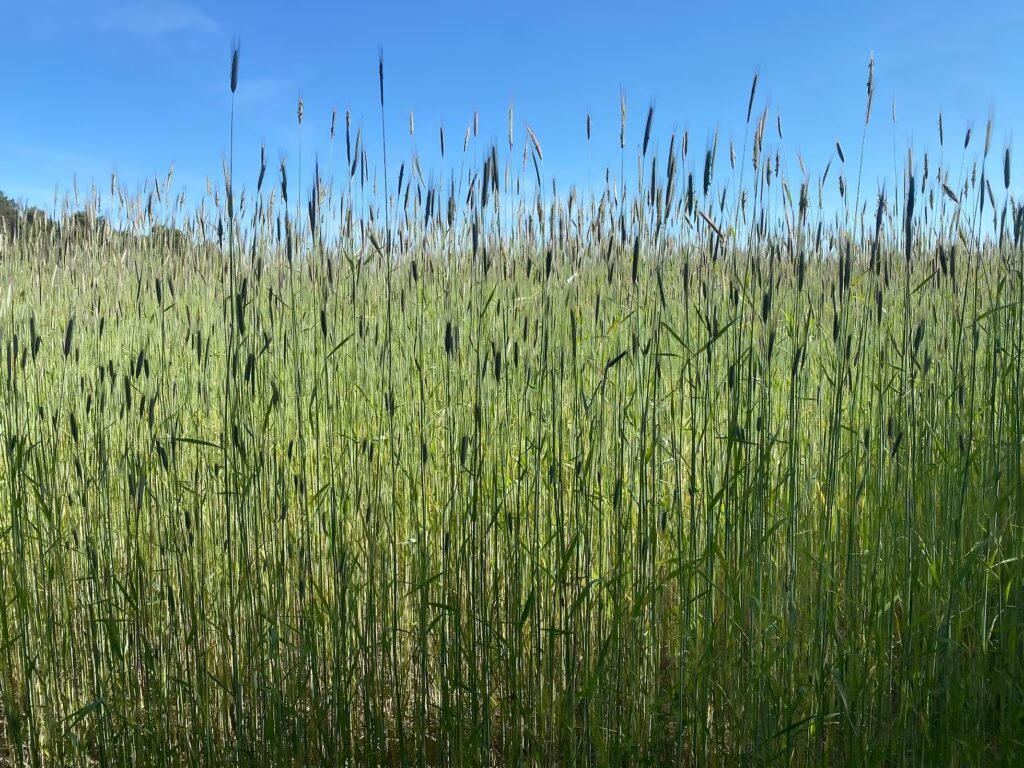
For farmers, it is essential to look at the big picture, and these details are fundamental. Linares elaborates on this: “Cereals have very small profit margins; sometimes the harvest only covers costs.” The work is annual, and crops must be rotated to prevent the spread of pests and diseases and to maintain nutrients. Rye is ideal for the end of the rotation because it “cleans the field” and has a lower incidence of weeds.
This has been the experience of Nemesio Herranz, a farmer from Aldea Real (Segovia). He inherited the trade from his parents and grows wheat, barley, and rye on his approximately 600 hectares, an option that many of his colleagues have rejected. “In terms of value, it has been declining,” he says, giving an example: “We are dependent on imports from countries where rye is abundant and more affordable.”
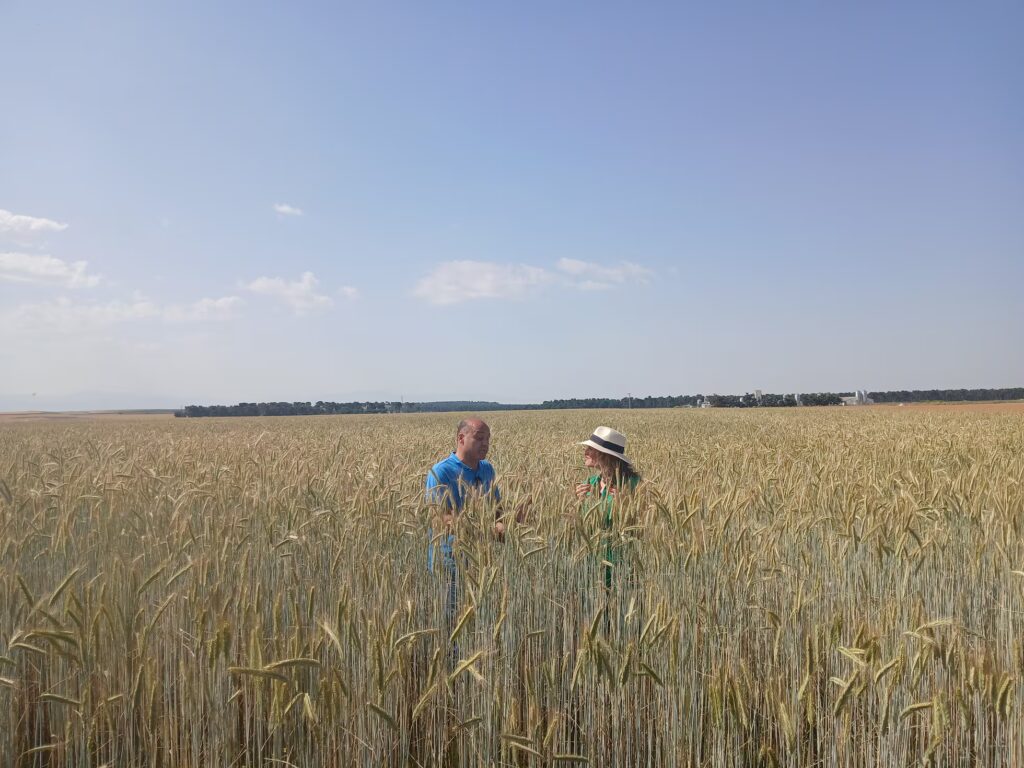
He harvested in July, and September and October are months for decisions and sowing. Herranz’s solution to make rye profitable has been to dedicate it to human consumption, something that is still uncommon. To this end, five years ago he began collaborating with Pascual: “Vivesoy drinks make it viable, giving the crop added value,” he says. With increasing demand from the food industry, rye can be more than just animal feed, allowing for greater crop amortization.
To achieve this, once harvested, the whole rye is first ground, the flour obtained is mixed with water until a final paste is achieved, and enzymes that break down the starch are added, explains Bravo, director of Plant Based at Pascual. The result is strained to achieve the silky texture of the drink. Finally, it is mixed with water and other ingredients: “It is enriched with calcium and vitamins D, E, and B12,” he notes.
The result benefits the Spanish countryside thanks to Pascual’s commitment to national farmers and is consistent with the company’s objectives: “Innovation is part of our new values; for us, it is essential to revitalize,” adds Bravo. At the same time, it is beneficial for consumers: “People were surprised by how delicious it is, and we managed to reach many households in the first few months.” Thus, consumers also get what they want: the opportunity to explore new flavors.


