Since 2011, the Research Centre for Agricultural and Environmental Risk Management (CEIGRAM) has participated in Science and Innovation Week, an initiative of the Community of Madrid, which this year celebrates its 25th edition between 3 and 16 November 2025. On this occasion, CEIGRAM has organised three activities aimed at students.
Science and Innovation Week, promoted by the Madri+d Knowledge Foundation, seeks to bring science, technology and innovation closer to the public, particularly encouraging scientific vocations among young people and promoting gender equality from the earliest stages of education.
This year, CEIGRAM collaborated with the BrotMadrid School, which has chosen food as the theme for the course, working on concepts such as ‘zero kilometre’ and the consumption of local products. The activities proposed by CEIGRAM were aligned with this theme and allowed the 52 second-year secondary school students and their four teachers to learn about innovative projects on the reconnection between livestock farming and agriculture and the sustainability of extensive livestock farming in Spain.
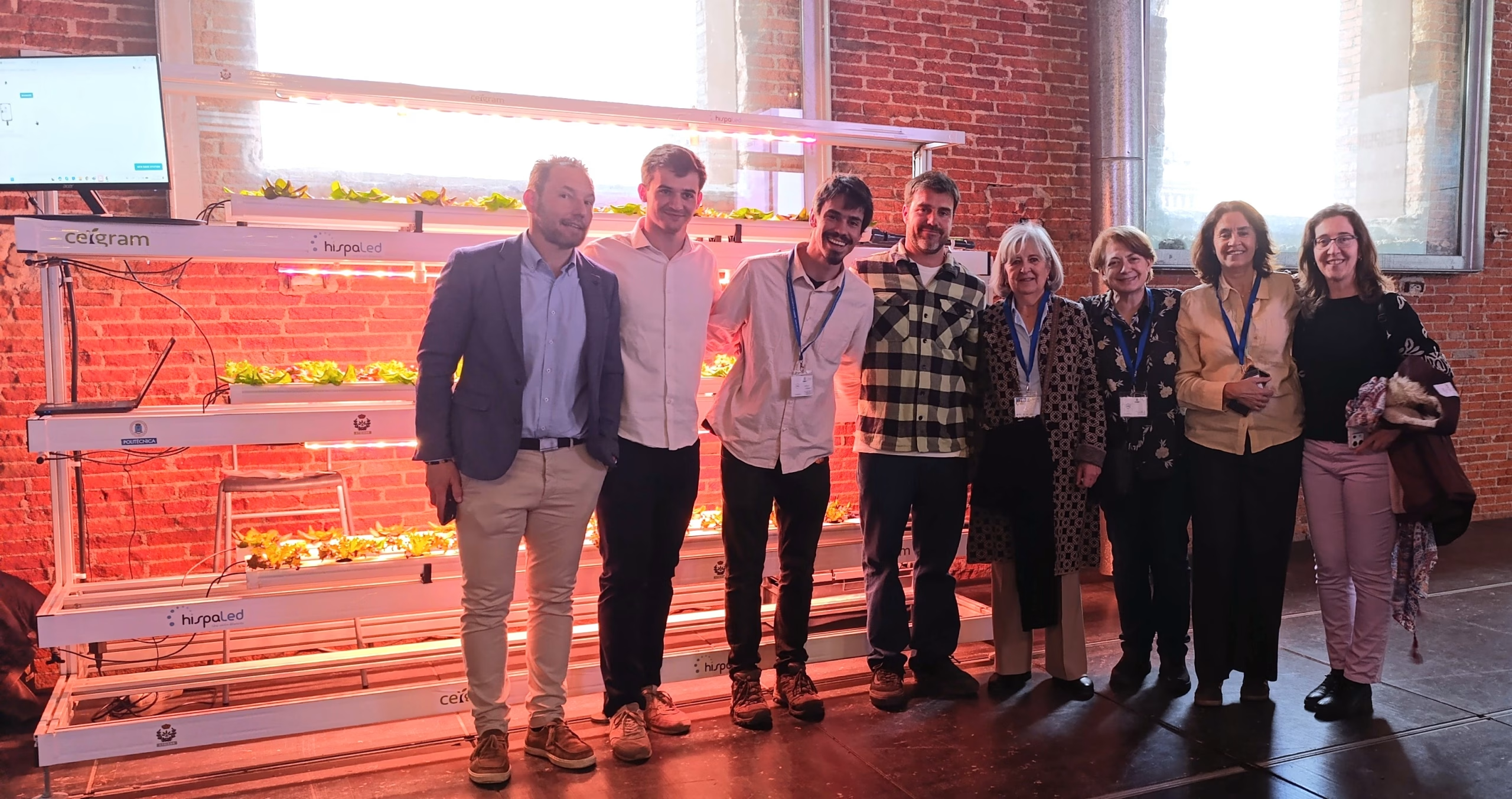
The day began with a visit to the trial fields of the Higher Technical School of Agricultural, Food and Biosystems Engineering (ETSIAAB), led by León Fernández, where students learned about hydroponic crops in the greenhouse and the trials of the Sun&Ceres project, which investigates agrovoltaic production: the cultivation of horticultural species under solar panels to combine energy and food generation.
Subsequently, the group split up to participate in two workshops on two ongoing research projects:
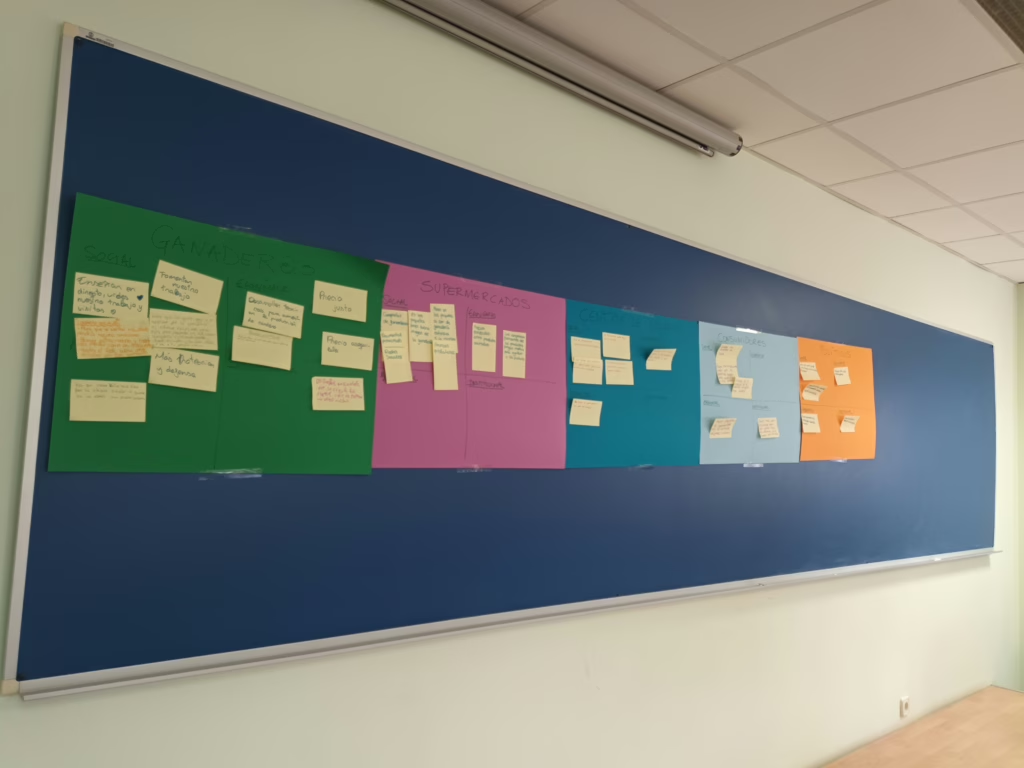
- AgrosceNa-NEXT, a project of the National Science Plan that seeks to reduce nitrogen losses in agriculture. Students discussed the advantages and limitations of different agricultural practices from the perspective of farmers and livestock breeders to promote reconnection between the two, thereby fostering the circular economy.
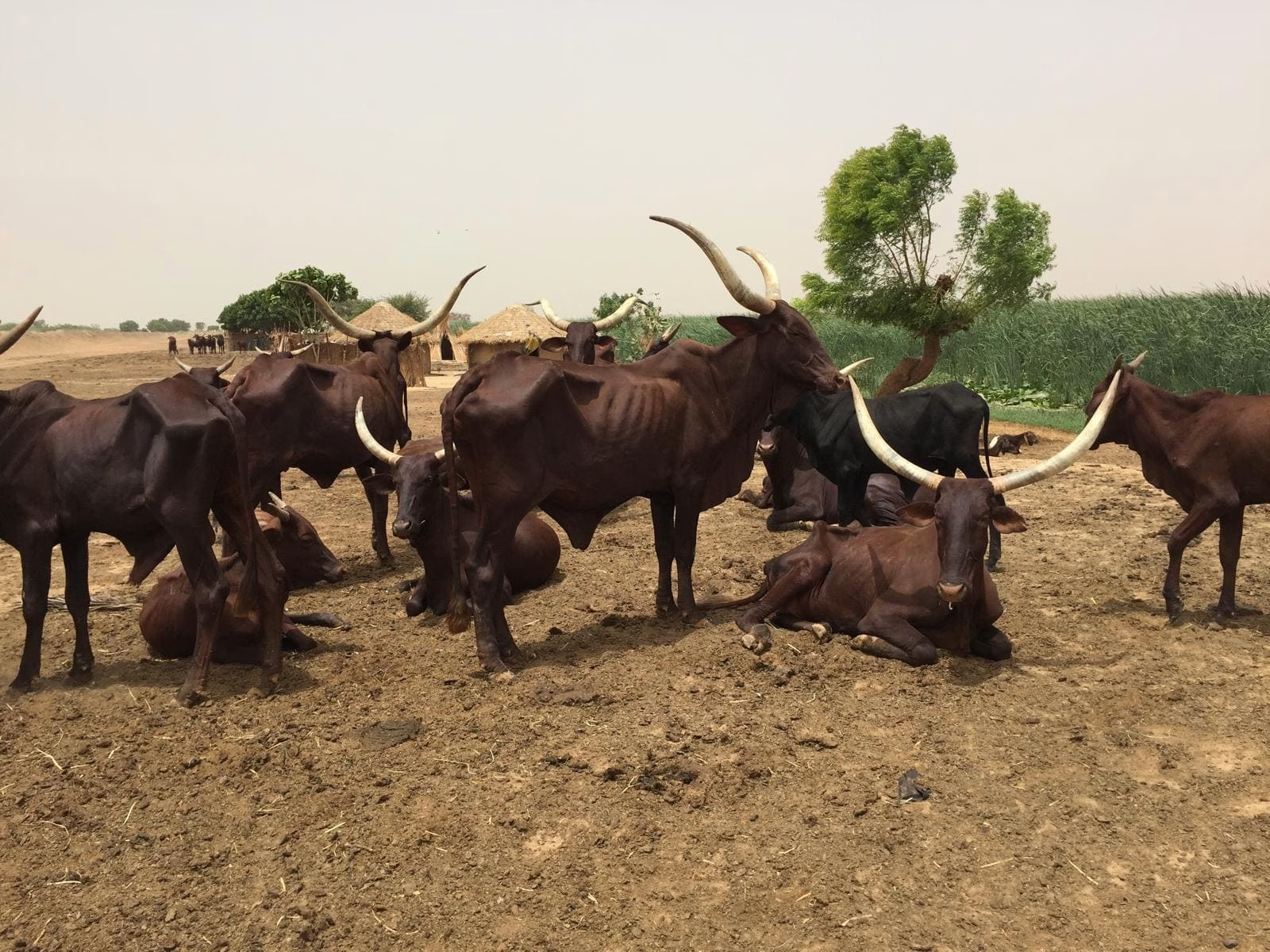
- FORTEX, which analyses the current situation of extensive livestock farming in Spain, highlighting its ecosystem services and challenges. This activity included a role-playing game in which participants designed actions to improve the sustainability of the sector.
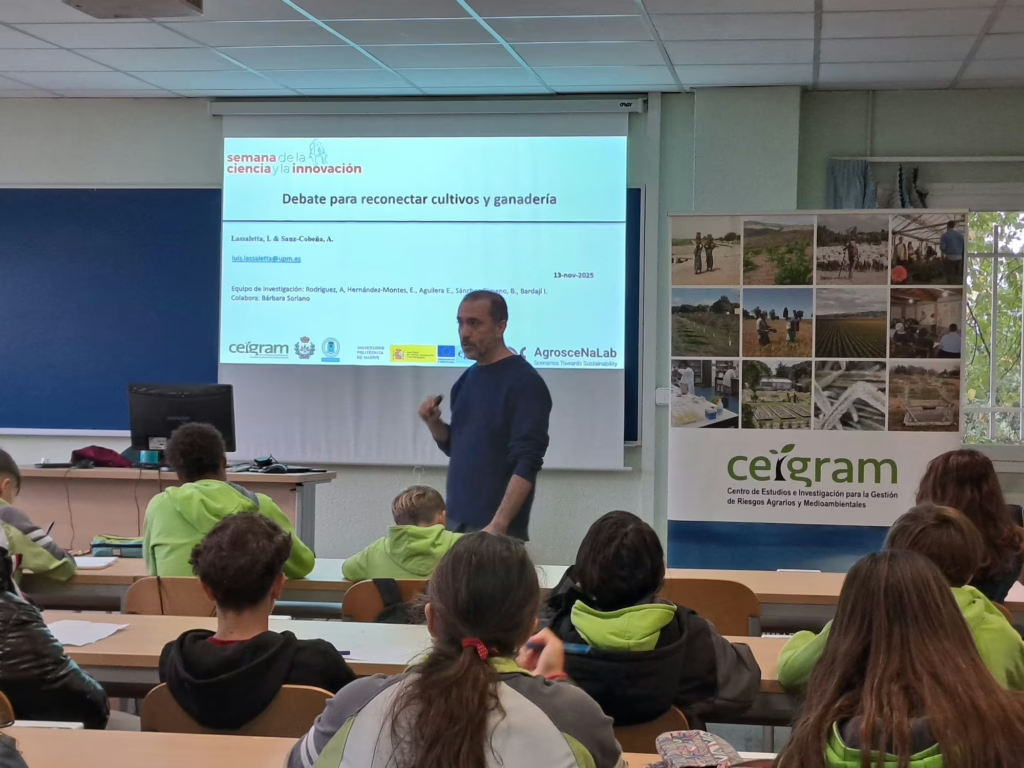
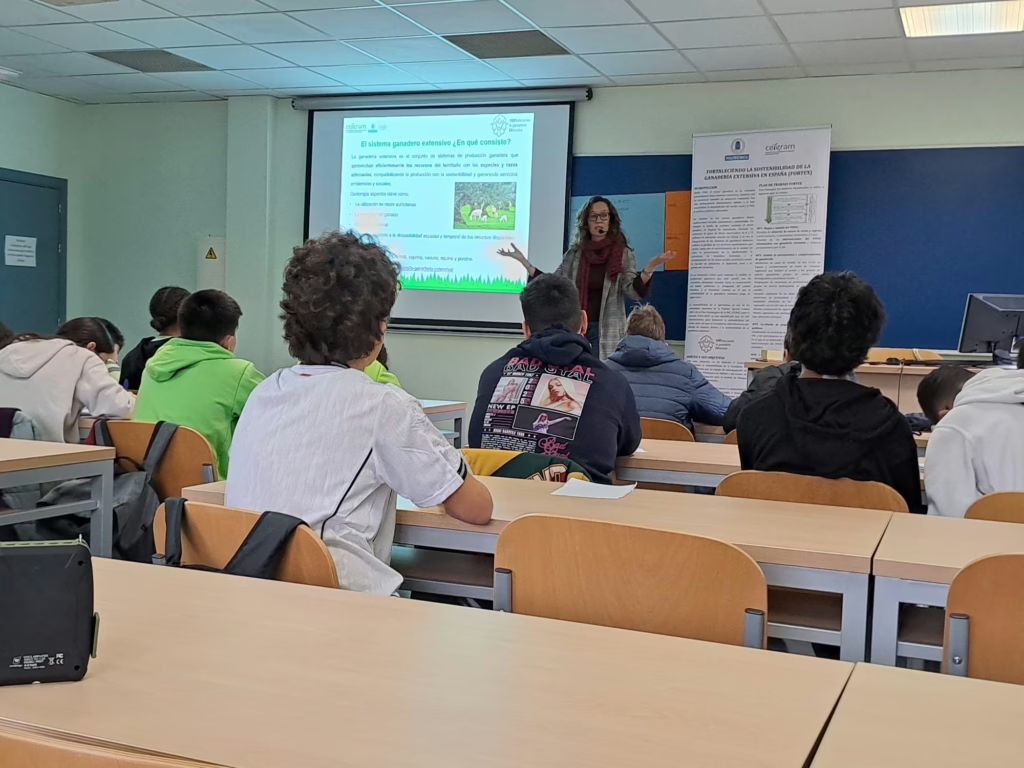
These activities have enabled students to learn about applied research and understand the importance of sustainability in food production. Collaboration between educational institutions and research organisations strengthens the link between science and society, sparking interest in environmental responsibility and sustainability among the younger generation.

The AgrosceNa-NEXT project (ref. PID2023-152562OB-I00) is co-funded by the Agencia Estatal de Investigación (AEI), part of the Ministerio de Ciencia, Innovación y Universidades, and the European Union through the European Regional Development Fund (ERDF).
The FORTEX Project is funded by the Community of Madrid through the grant agreement for the promotion and advancement of research and technology transfer at the Universidad Politécnica de Madrid, in Line A, ‘Emerging Doctors’.