The FORTEX research project developed by a group of researchers from the Research Centre for the Management of Agricultural and Environmental Risks (CEIGRAM) at the Universidad Politécnica de Madrid (UPM) has as its main objective to contribute to the sustainability of extensive sheep and goat farming in Spain through a better understanding of the problems facing the sector and the design of effective interventions within the Common Agricultural Policy, within the framework of the CAP Strategic Plan (PEPAC).
The project is currently at its halfway point. Analysis of the evolution of sheep and goat censuses in each autonomous community and the allocation of budgets to Pillar II interventions of the PEPAC 2023-2027 with a direct impact on extensive livestock farming at the AC level (accessible here ) shows, among other aspects, that in the face of a generalised pattern of decline in numbers at both regional and provincial level, the way in which the CCAA are addressing this situation varies greatly, considering the different budgetary distribution between interventions with a direct impact on extensive livestock farming defined in each CCAA. Some are more focused on social interventions, such as the incorporation of young farmers in the case of Castilla La Mancha, others prioritise environmental interventions such as aid to areas with natural constraints in Aragon, and finally, other autonomous communities prioritise economic interventions such as investments in processing and production for Extremadura and Andalusia.
Interviews are being conducted with relevant stakeholders in extensive livestock farming at the national level (livestock farmers, cooperatives, producer associations, environmental organisations and platforms, and research personnel) in order to gauge their perception of the impact of PEPAC interventions on extensive livestock farming in terms of social and economic sustainability. To this end, a list of the main PEPAC interventions with a direct impact on extensive livestock farming has been co-designed with stakeholders in the sector, and the CAP’s economic and social sustainability indicators have been identified. The study of socio-economic impacts will provide insight into the sector’s priorities with regard to the PEPAC interventions that it considers most decisive for its sustainability.
At the same time, in collaboration with the University of Zaragoza and the CSIC, an experiment is being designed for livestock farmers to analyse the extent to which they would be willing to participate in controlled grazing programmes in order to contribute to fire prevention. This line of work reinforces the strategic role of extensive livestock farming not only as a productive activity, but also as a key tool for land management, with countless ecosystem services that ensure ecological balance in the national landscape.
All this work is aimed at generating knowledge that will enable co-design with the main stakeholders in the sector of proposals for improving CAP interventions, so that these contribute more ambitiously to the sustainability of extensive livestock farming, ensuring the future of the sector and highlighting the value of ecosystem services and the associated cultural heritage.
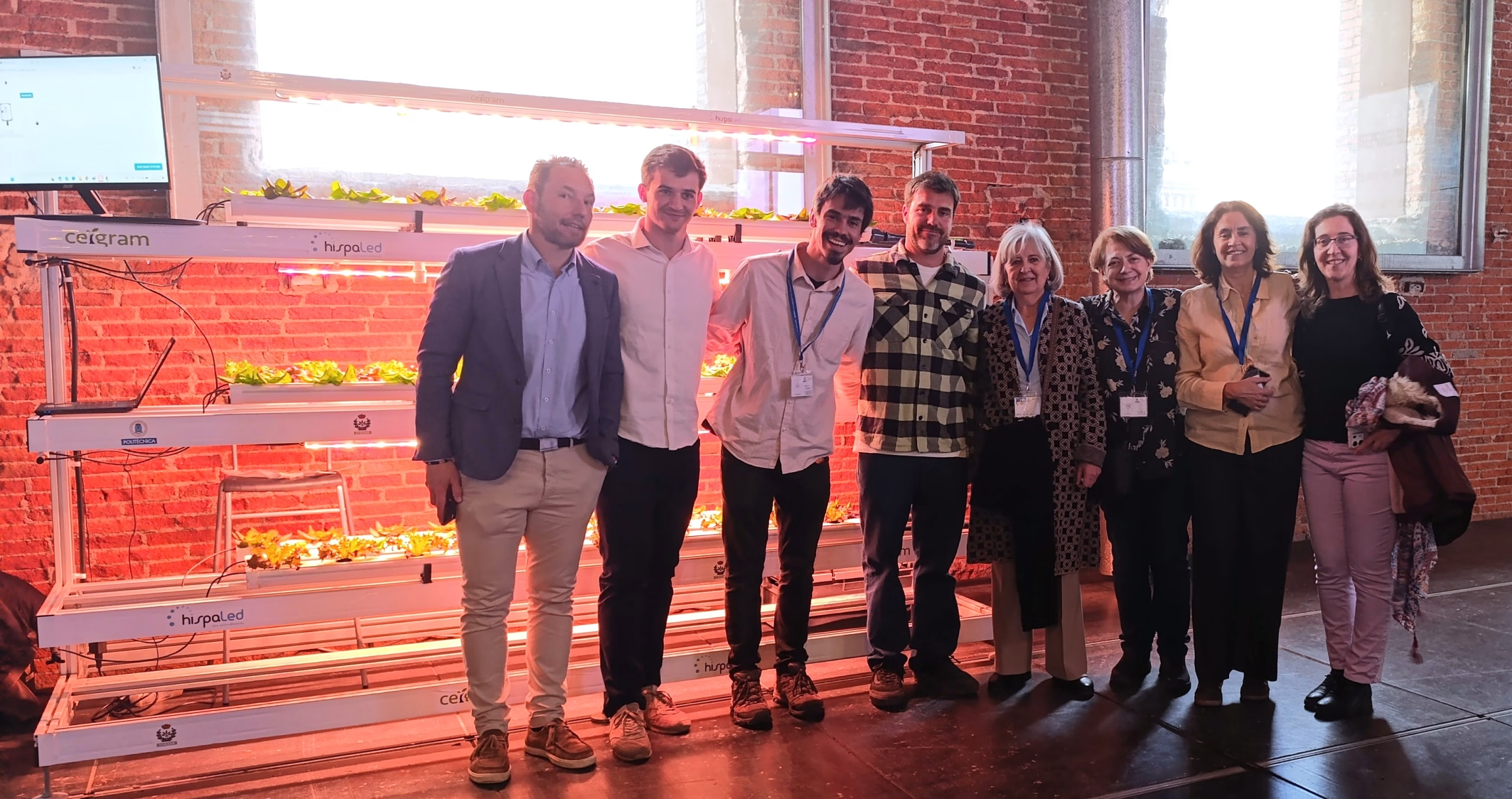
FORTEX has also launched a dissemination and communication strategy, which includes the creation of its website and social media profiles (LinkedIn, X and Instagram), as well as participation in informative events such as Science Week, UPM Conecta and conferences such as Territorios Pastoreados (Grazed Territories) and the 15th Agri-Food Economics Conference, where we received the AEEA Young Researchers Award for the best oral presentation in subject area 2: agricultural, agri-environmental, food and international trade policy.
These actions seek to bring the knowledge generated closer to both the sector and society and to expand the network of potential collaborators when carrying out the activities mentioned above.
To learn about the latest developments in the FORTEX project and follow its results closely, we invite all interested parties to visit our website and follow us on X, LinkedIn, and Instagram, where we will continue to share news, activities, and opportunities for collaboration.

This project is funded by the Community of Madrid through the grant agreement for the promotion and advancement of research and technology transfer at the Polytechnic University of Madrid, in Line A, Emerging Doctors.