The 1st Stakeholder Meeting of the ACT4CAP27 project took place on October 23rd, 2024. The main objective of this event is to bring together researchers of the project with key actors of the agri-food sector to discuss the results obtained so far and future strategies. The ACT4CAP27 project aims to develop innovative tools to quantitatively assess the impact of climate, agricultural and forestry policies in order to guide decision-making towards a more sustainable future.
The meeting was attended by Sophie Helaine, Director of the A3 Policy Performance Unit of the Directorate General for Agriculture and Rural Development (DG AGRI), who explained the Commission’s expectations regarding the development of the project and the expected results. She emphasized that the European vision of the agrifood system, in line with that of the ACT4CAP27 Project, takes into account all the links in the chain and their complexity, and that it is equally important to support production and ensure the profitability of farms, as it is to guarantee the social and environmental sustainability of the European agricultural sector.

Following an overview of the project by coordinator Siemen van Berkum, María Blanco, leader of the UPM-CEIGRAM team, presented the preliminary results of the baseline scenario, which reflects the foreseeable evolution of the agri-food sector, taking into account current trends and policies. Although the project is still at a preliminary stage, a sample of the initial results allowed to start the discussion on which assumptions should be taken into account and which aspects could be improved to refine the baseline scenario.
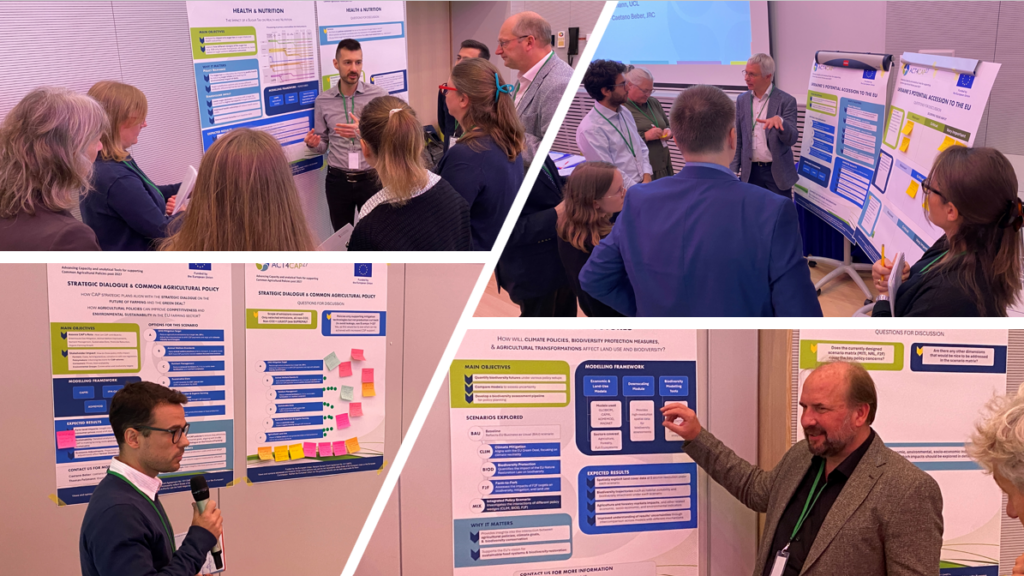
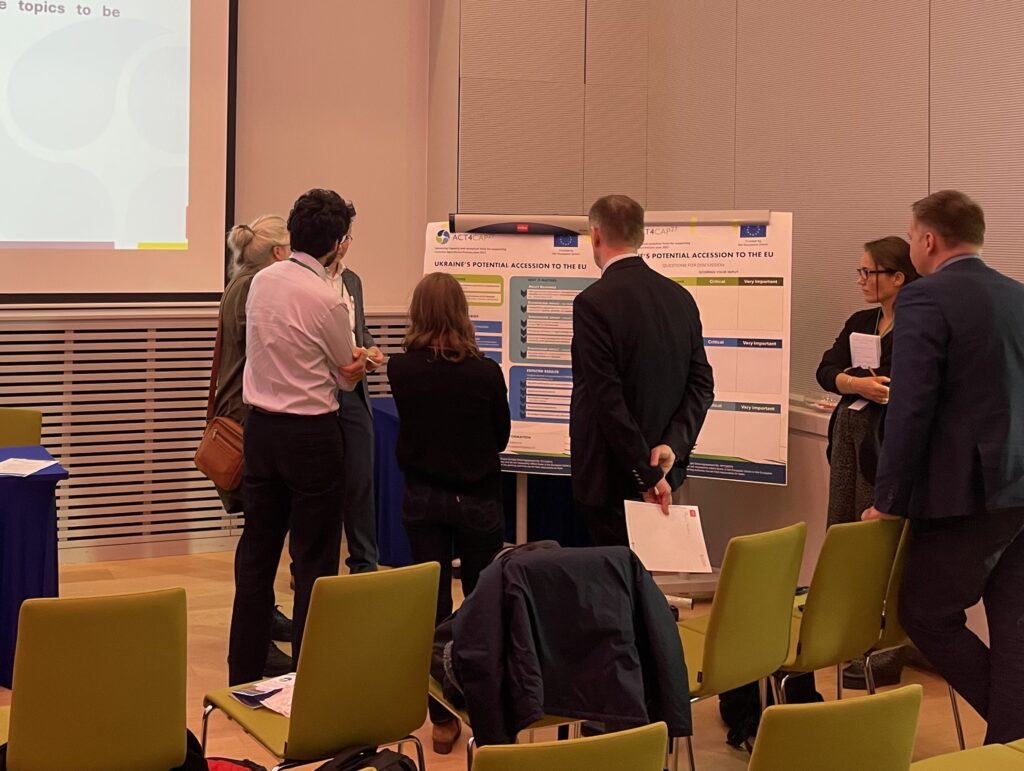
This was followed by an interactive session led by Davit Stepanyan, who presented a series of informative posters on four future scenarios being worked on, and then engaged with stakeholders to gather their views on possible improvements and potential collaborations.
In conclusion, such events, in which key stakeholders are involved, serve to better orient the objectives and hypotheses of the project, considering the contributions and demands of the stakeholders. The proposed scenarios should take into account the orientation and willingness of these stakeholders. Their participation in the development of the project, at least in these initial phases, can ensure that the proposed scenarios are well received by policy makers, lobbyists, advisors and others responsible for guiding public policy at the European level towards a more sustainable future.